
You don’t have to be a bodybuilder to benefit from fitness. True strength isn’t just about lifting heavy weights. It’s about moving efficiently, staying injury-free, and performing everyday tasks with ease.
Here’s the idea behind functional fitness: training your body for real-life movement, not just gym aesthetics. Whether you’re chasing kids, carrying groceries, or sitting at a desk all day, functional training helps you move better, feel stronger, and live longer.
What Functional Fitness Really Means
Functional fitness focuses on exercises that mimic natural movement patterns. This includes activities such as pushing, pulling, bending, twisting, squatting, and walking. Instead of isolating muscles, it trains muscles to work together, the way your body actually moves in daily life.
These movements build stability, balance, coordination, and mobility, all of which are essential for long-term physical health. Unlike traditional strength training, which targets a single muscle group at a time, functional workouts engage multiple systems simultaneously. This includes the muscular, skeletal, and nervous systems, creating strength that translates beyond the gym.
In short, it’s fitness with purpose: strength that supports how you live, not just how you look.
See Breaking the All-or-Nothing Health Mindset for a simple mindset shift that supports sustainable training.
The Benefits of Functional Training
- Improved Mobility and Posture. Functional exercises train your body to move with proper alignment, reducing back pain and stiffness caused by prolonged periods of sitting.
- Better Balance and Coordination. Multi-joint movements activate stabilizer muscles, keeping you agile and lowering the risk of falls or injuries.
- Everyday Strength. You’ll notice tasks like lifting boxes, climbing stairs, or yard work become easier because you’re training movements, not just muscles.
- Joint Protection. Functional workouts emphasize control and proper mechanics, helping to keep joints healthy as you age.
- Time Efficiency. Because they engage multiple muscle groups, functional exercises deliver a full-body workout in less time.
The result? A body that’s not only strong but adaptable. Functional fitness training makes you prepared for anything life throws your way.
Sample Functional Exercises for Beginners
You don’t need fancy equipment or a gym membership to start. Here are a few foundational moves you can do anywhere:
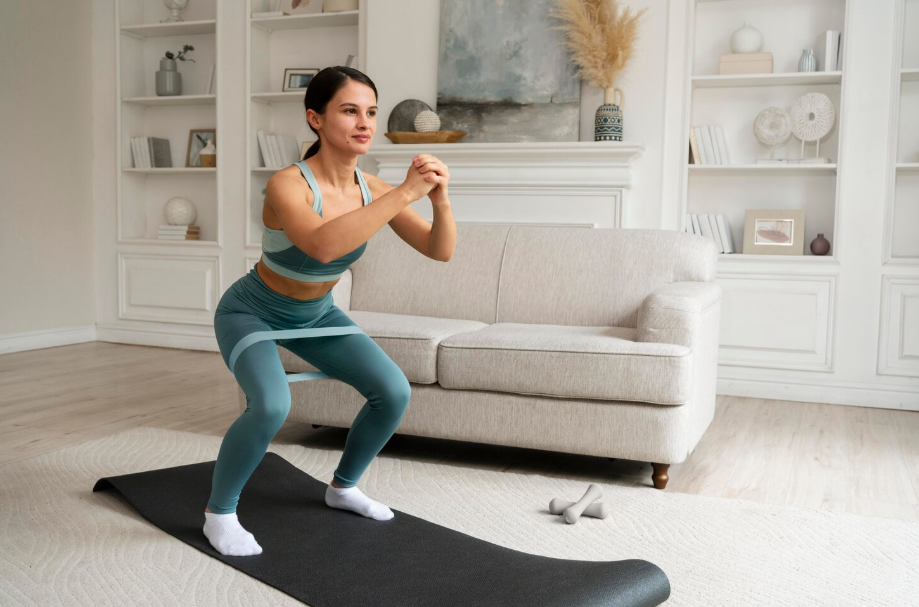
- Squats: Build leg and core strength while improving hip mobility.
- Lunges: Strengthen your lower body and improve balance and coordination.
- Push-Ups: Engage chest, shoulders, arms, and core simultaneously.
- Planks: Develop core stability to support posture and spinal health.
- Farmer’s Carry: Hold weights (or grocery bags) at your sides and walk slowly. This builds grip strength and real-world endurance.
- Deadlifts (Bodyweight or Weighted): Train your posterior chain—back, glutes, and hamstrings—for safe lifting mechanics.
Focus on form first. Once you can perform each movement smoothly, gradually increase the resistance or the number of repetitions. Even 20–30 minutes of consistent practice three times a week can make a noticeable difference.
To keep motivation high as you start, see The Science of Motivation in Fitness.
How to Integrate Functional Fitness Into Daily Life
Functional fitness doesn’t have to be confined to workout sessions. It’s a mindset. Look for ways to incorporate movement throughout the day.
Take stairs instead of elevators, practice squatting instead of bending at the waist, or use a stability ball chair to engage your core at work. These micro-movements reinforce mobility and strength between workouts.
If you prefer structure, combine functional moves into short circuits: 3–4 exercises repeated for several rounds with minimal rest. This builds endurance and mimics real-life activity, where your body rarely stops moving altogether.
For quick routines that fit busy schedules, see Micro-Workouts for People With No Time.
Training for Longevity, Not Perfection
Functional fitness shifts the goal from appearance to ability. It’s about how well your body performs and adapts over time. Instead of chasing quick results, you’re building a foundation that supports active living well into the future.
With consistency, your energy increases, pain decreases, and confidence grows. It’s not about being the fittest person in the room. It’s about being strong enough to enjoy life truly.